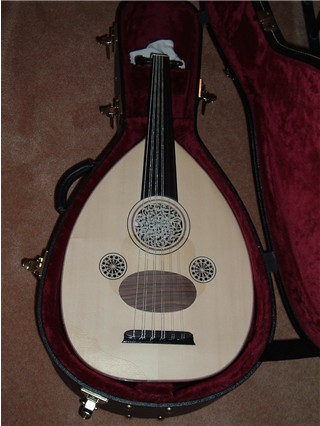
To really preserve your strings and keep a strong, constant tone, do the following: Spray a very small amount of "Finger-ease" on a soft cloth and, avoiding the soundboard area completely, pinch each string and slide up and down cleaning with the applied area. Afterwards, wipe down the strings with a dry part of the cloth to remove any residue. It's also recommended that you do this to brand new strings before putting them on the instrument, removing any chemical treatment they have had from the factory. This spray works on all types of strings for all instruments.
Every time I change my strings (about every 6 months or so) I apply some "Hill" brand peg compound that you can buy at any violin shop. I apply a little around each peg at the two "rings" where it is visible the peg contacts the pegbox, then I rub a little "Ivory" brand soap (99% pure soap) onto the applied peg compound which will then mix together for a smooth yet stable turning peg.
You may notice black marks on the face of your instrument under the treble strings where the neck meets the face, and also above the pickguard if you are picking above that area. This can be safely and easily removed using Naptha (cigarette lighter fluid, i.e. Zippo). Just apply a little Naptha to a soft cloth and rub the area with the mark/stain along the grain. This also works well for marks left by pickup/microphone adhesives you might use to amplify your oud. It is the safest and easiest way to remove marks and stains from finished or unfinished woods, and evaporates within a few minutes leaving a clean, almost new surface.
You should never attempt to put any oils or finishes on the oud face unless you are sure you know what you are doing. It will stain permanently, and possibly negatively affect the oud's sound (it will probably require sanding to remove).
Never leave your oud in the car, in the sun, by a heater, anywhere it might be exposed to too much heat, cold, sunlight, etc. Extremes are bad for your instruments.
Keep an eye on the humidity. Too much or too little is not healthy for the woods on your oud. Try to keep it around 40-60% or so.
Always have a hard case for your oud. You would make your child wear a seatbelt wouldn't you? Protect your oud(s) too, they deserve it.
It doesn't hurt every few years to have your oud examined by its maker, or by another experienced luthier/oud maker for a 'check-up.' This is especially true for older instruments.
Finally, to get the best sound out of your instrument(s), play often!